Preparing a home-cooked meal is universally recognized as one of the healthiest choices a family can make. From selecting fresh organic produce to sourcing lean proteins, control over ingredients is the primary benefit of kitchen cooking. However, a major hidden hazard often sits directly on the kitchen counter, quietly compromising food safety before the stove is even turned on.
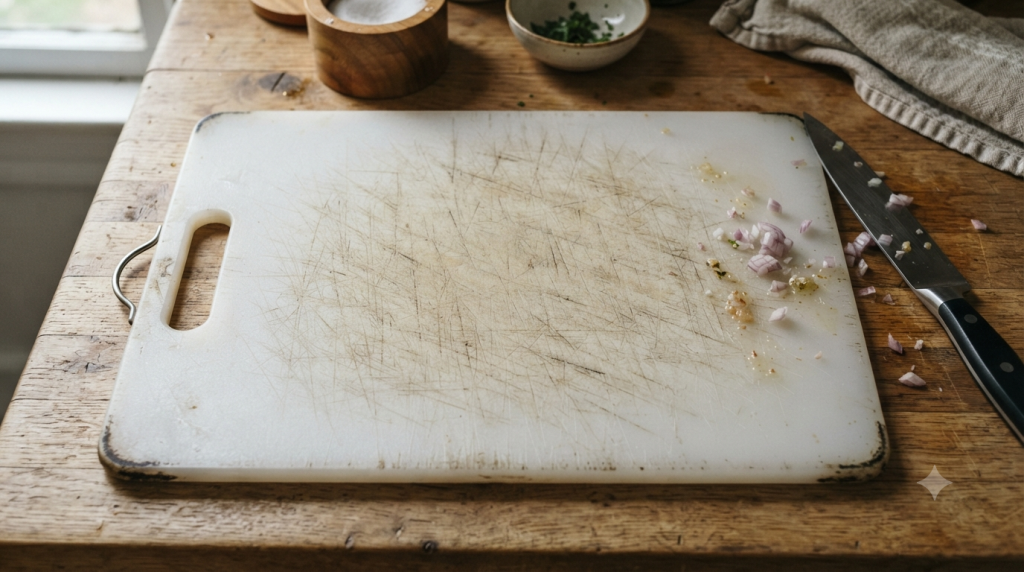
Is using a plastic cutting board safe? No, utilizing a plastic cutting board is increasingly flagged by environmental health scientists as a dangerous kitchen trap that releases millions of microscopic plastic particles directly into fresh food every day. While commercial brands market polyethylene and polypropylene boards as hygienic and easy to clean, real-world laboratory testing reveals that mechanical blade friction shaves off significant amounts of microplastics, turning a standard dinner prep into a source of chemical contamination.
For modern households striving to eliminate toxic synthetic chemicals from their diets, understanding this industrial kitchen trap is critical.
📌 Quick Key Takeaways for Conscious Cooks
- The Microplastic Ingestion Rate: Recent peer-reviewed studies show that cutting food on a plastic board can transfer tens of millions of microplastics to human meals annually.
- The Bacterial Illusion: Deep knife scars in plastic surfaces are virtually impossible to fully sanitize, acting as perfect breeding grounds for dangerous bacteria like E. coli.
- The Safe Kitchen Alternative: Transitioning to heavy-duty, completely natural wooden or organic bamboo cutting blocks eliminates industrial polymer shedding entirely.
The Hidden Kitchen Reality: Reddit & Consumer Reports Insights
The growing anxiety surrounding plastic kitchenware is heavily reflected in modern consumer advocacy reports and viral wellness discussions across online communities like Reddit.
On popular health and sustainability subreddits like r/sustainability and r/Biohackers, a massive shift in consumer behavior is taking place. Users frequently share close-up photographs of their heavily used plastic chopping boards, pointing out the distinct, fuzzy texture of frayed plastic hairs inside the deep knife grooves. Commenters regularly express shock when realizing that those missing plastic fragments did not simply vanish down the sink during washing—they were ground directly into the family’s raw vegetables, poultry, and steaks over months of food preparation.
Developing a defensive mindset toward hidden culinary hazards is a critical skill for any conscious traveler or home cook. Just as smart vacationers must carefully research hidden ingredient processing by reading a comprehensive guide on why is us white bread banned in europe, they must apply that same level of strict vigilance when exploring physical destinations. Whether you are building a safe bucket-list itinerary using a premium miami vacation guide or learning how tropical humidity impacts raw fish through real-world hawaii poké bowl safety rules, guarding your health begins with spotting regional environmental risks before ordering your next meal.
This community concern aligns perfectly with scientific data published by the American Chemical Society (ACS) Their rigorous laboratory testing confirmed that a single individual can unconsciously ingest roughly 50 grams of microplastics every single year purely from food chopped on synthetic boards. To put that into perspective, that is the structural equivalent of swallowing an entire plastic credit card every twelve months, a statistic that has completely transformed how western households view kitchen hygiene.
The Science of Blade Friction: How Polymers Shed Into Food
To understand why these industrial kitchen boards are so problematic, one must evaluate the material science of commercial polymers. Most low-cost cutting boards are manufactured using High-Density Polyethylene (HDPE) or Polypropylene. These materials are favored by factories because they are cheap to mold, highly durable against impacts, and completely dishwasher safe.
However, these plastics are fundamentally unequipped to handle the repetitive, localized pressure of a sharp stainless-steel kitchen knife. Every time a chef slices an onion, chops herbs, or separates chicken wings, the razor-sharp edge of the blade acts as a microscopic plow.
As the knife makes contact with the board, it creates a micro-groove, forcing the surrounding plastic to warp and splinter. Over time, these micro-splinters detach completely. Because raw proteins and wet vegetables naturally stick to the surface of the board via surface tension, these invisible plastic flakes easily adhere to the food items.
Unlike natural food fibers, these synthetic microplastics cannot be broken down by human stomach acid or digestive enzymes. Once ingested, they pass into the gastrointestinal tract, where researchers are actively studying their ability to trigger chronic gut inflammation and disrupt the delicate human microbiome.
💡 PRO TIP: To test if a plastic chopping board is already shedding dangerous material, run a clean thumbnail firmly across the most heavily scratched center section. If tiny, thread-like plastic white curls scrape up under the nail, the board is severely degraded and should be pulled from active food preparation immediately.
The Sanitization Myth: Why Plastic Breeds Bad Bacteria
For decades, mass-market advertisers heavily pushed plastic cutting boards as the ultimate sanitary choice, claiming they were superior to wood because plastic does not absorb liquids. The logic seemed sound: since wood is porous, it must trap raw meat juices and breed deadly bacteria, while non-porous plastic can simply be wiped clean.
Modern microbiological research has thoroughly debunked this myth, revealing a starkly different reality:
The Safe Capillary Action of Natural Wood
When raw meat bacteria settle onto a wooden cutting block, the natural capillary action of the wood fibers draws the moisture and microscopic pathogens deep down into the inner core of the wood. Once trapped inside, the bacteria are completely deprived of oxygen and moisture, causing them to naturally suffocate and die off within a few hours.
The Imperfect Trap of Micro-Grooves
Plastic possesses absolutely zero natural self-sanitizing properties. When a knife leaves a deep scar in a plastic board, the edges of that groove naturally pinch backward, creating a microscopic cave. When the board is washed—even inside a high-temperature home dishwasher—the water pressure and dish soap cannot physically penetrate into the deepest pits of these narrow, pinched cuts. Residual organic food matter and moisture remain trapped inside, creating a highly resilient matrix of bacteria that contaminates the very next food item sliced on that surface.
Commercial Kitchen Cutting Board Material Comparison
| Surface Material | 🟢 Environmental Safety | 🔴 Microbial Retention | 🔪 Effect on Fine Knives |
|---|---|---|---|
| Organic Bamboo | 100% Biodegradable; zero chemical leaching | Low absorption; naturally resistant to scoring | Gentle on steel; preserves edge alignment |
| Hardwood (Walnut/Maple) | Completely non-toxic; absorbs and kills bacteria | Self-sanitizing capillary action dries out pathogens | Best for knives; fibers absorb blade impacts safely |
| Polyethylene Plastic | Extreme hazard; sheds millions of microplastics | High retention; bacteria hide inside deep knife scars | Dulls fine blades rapidly due to rigid dense plastic |
The Clean Kitchen Solution: Safe Material Upgrades
Transitioning away from synthetic polymer boards does not mean sacrificing kitchen efficiency. Swapping out toxic plastics for traditional, sustainable materials permanently eliminates industrial chemical shedding from daily meals.
Sourcing Heavy-Duty Wooden Cutting Blocks
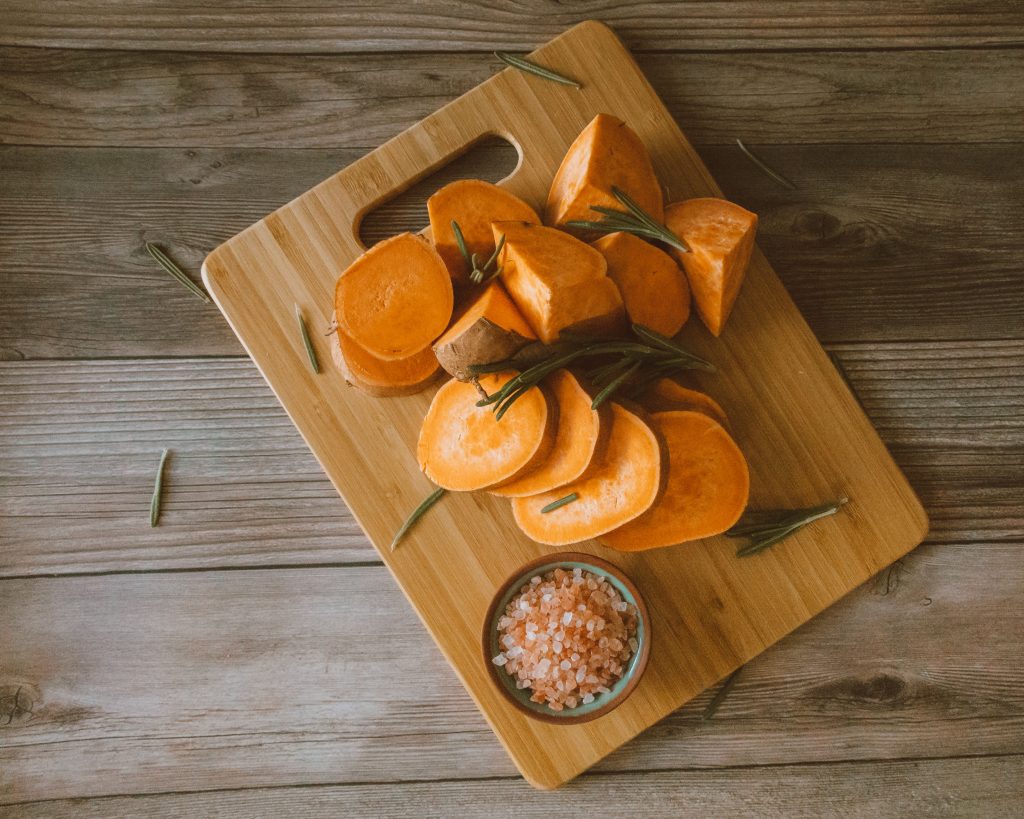
The gold standard for any chemical-free kitchen is a solid, end-grain hardwood cutting block made from tight-grained woods like Maple, Walnut, or Cherry. End-grain construction arranges the wood fibers vertically, meaning the kitchen knife slips between the natural fibers rather than cutting across them. This entirely prevents the creation of frayed splinters and allows the wood to naturally “self-heal” after the blade is removed.
Utilizing Sustainable Bamboo Systems
For a lightweight, budget-friendly alternative, dense bamboo boards provide excellent durability. Bamboo is technically a grass, making it incredibly dense and highly resistant to deep knife scarring. Choosing a premium, organic bamboo board constructed with non-toxic, formaldehyde-free food-grade glues ensures that the entire meal prep process remains purely organic and safe from agricultural chemical residues.
💡 PRO TIP: Never clean a high-quality wooden or bamboo cutting board with chemical dish soap. Instead, scrub the surface with coarse sea salt and a halved fresh lemon. The citric acid acts as a natural disinfectant, while the salt crystal texture lifts organic food particles out of the grain safely without drying out the wood.
Frequently Asked Questions (FAQs)
Q: Can a plastic cutting board be safely restored by sanding down the surface?
A: No. Sanding a degraded plastic board with sandpaper actually creates millions of additional micro-scratches and loose plastic dust particles, drastically increasing the rate of microplastic transfer to your food during the next use.
Q: Are colored plastic boards safer than standard white grocery store boards?
A: No. Colored plastic cutting boards are made from the exact same chemical polymers (HDPE or polypropylene) as white boards, with the added disadvantage of containing synthetic chemical dyes that can also leach into warm or acidic foods.
Q: How often should a natural wooden cutting board be seasoned to maintain safety?
A: To keep a wooden block from cracking or absorbing excessive moisture, the surface should be treated with food-grade mineral oil or organic beeswax once every 4 to 6 weeks, depending on how often it is washed.