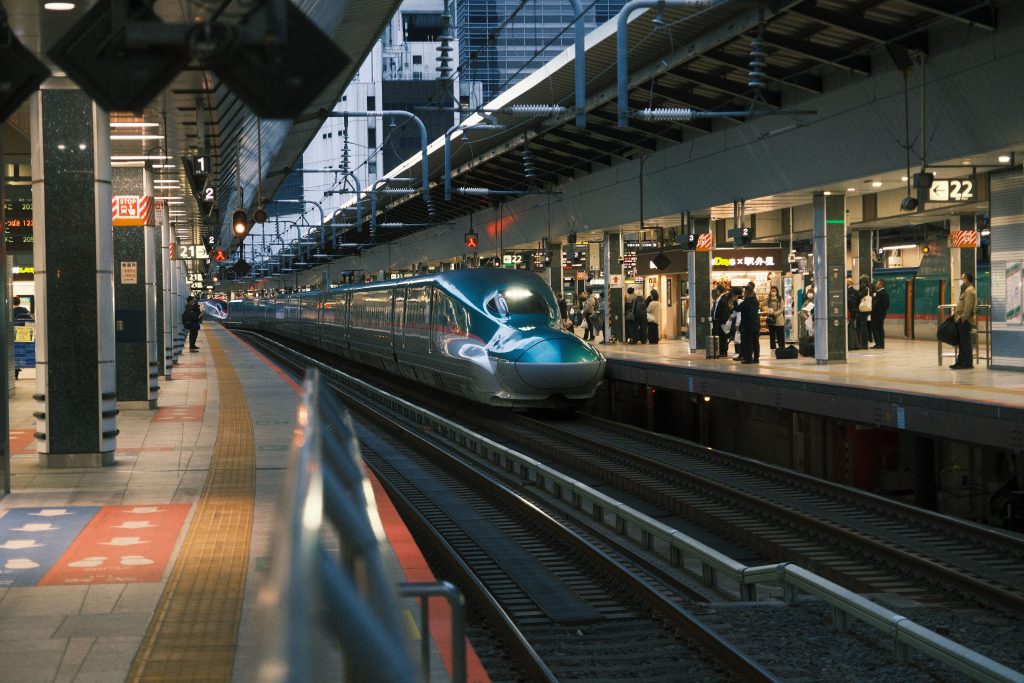
Navigating Japan’s rail network can feel overwhelming for first-time American travelers. The Shinkansen (bullet train) is fast, punctual, and efficient, but a single mistake can cost you time and money. Whether you are planning a food-focused trip to Japan or a quick getaway, this practical guide ensures you master the system like a seasoned local.
Nozomi vs. Hikari: Choosing Your Tokyo-Kyoto Transit
Choosing the right train between Tokyo and Kyoto is your first major decision. The two primary train types on the Tokaido Shinkansen line are the Nozomi and the Hikari. Understanding their differences will save you both hours and unnecessary stress.
- The Nozomi Train: This is the fastest category. It connects Tokyo to Kyoto in just 2 hours and 15 minutes, making only a few essential stops.
- The Hikari Train: This is the semi-fast option. It takes roughly 2 hours and 40 minutes because it stops at more regional stations along the way.
The Pass Dilemma: If you are using the traditional Japan Rail (JR) Pass, note that it does not cover the Nozomi for free. You must pay a hefty supplemental fee. The Hikari, however, is fully covered by the JR Pass. For US travelers who value strict time management, paying out-of-pocket for a Nozomi ticket is often worth the extra expense to maximize your sightseeing time.
💡 Pro-Traveler Tip: If you want a breathtaking view of Mount Fuji while traveling from Tokyo to Kyoto, always book a window seat on Side E (the right side of the train). If you are traveling backward from Kyoto to Tokyo, book Side A.
Luggage Rules 2026: Booking Oversized Bag Spaces
Japan’s train stations are built for efficiency, meaning massive American-style suitcases face strict regulations. The luggage rules require mandatory reservations for oversized bags to prevent crowding in passenger aisles.
- What Counts as Oversized? Bags with total dimensions (length + width + height) between 160 cm and 250 cm require a special reservation. Anything larger than 250 cm is prohibited on the train.
- The Reserved Seats: When you buy your ticket, you must specifically request a seat with an “Oversized Baggage Area” (usually the last row of the car) or an “Oversized Baggage Compartment.”
- The Penalty: If you board the Shinkansen with an oversized bag without a prior reservation, train conductors will charge you a 1,000 JPY penalty fee on the spot, and your bag will be moved to a secure area.
Standard carry-on luggage and medium backpacks do not require reservations and can easily fit on the overhead racks above your seat.
💡 Pro-Traveler Tip: Spaces for oversized baggage are highly limited per train car. If you are traveling during peak hours or holidays, book your specific baggage seat at least 2 to 3 weeks in advance using the official SmartEX app.
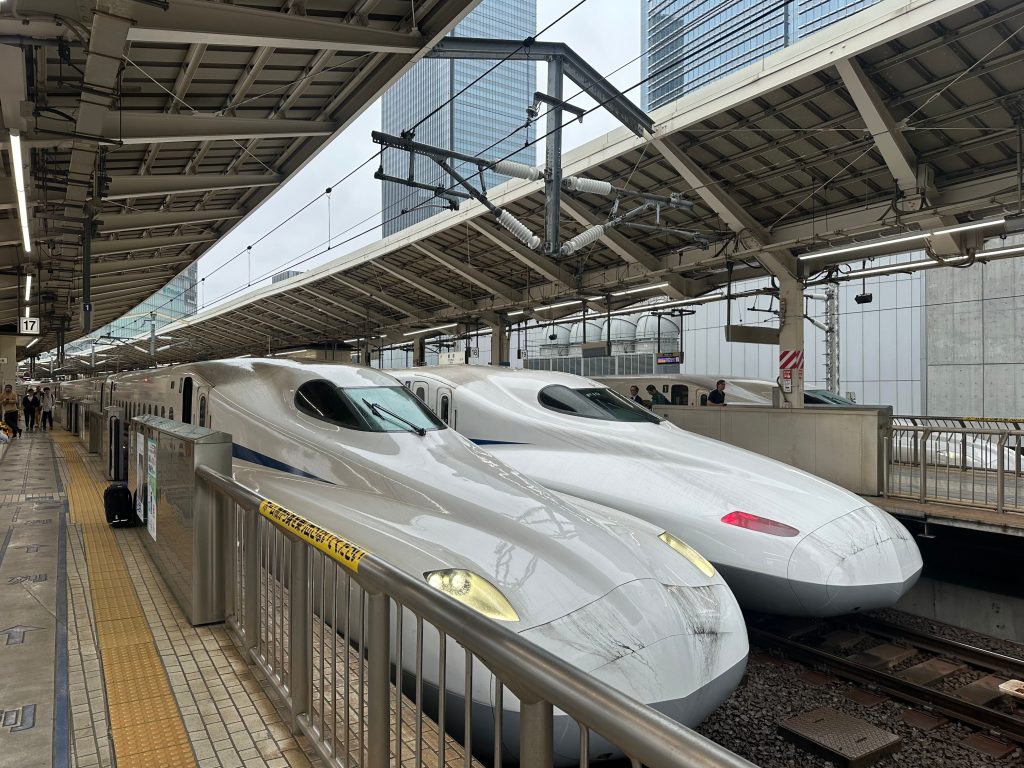
The Smart Card Trick: Suica/Pasmo for Boarding
A common myth among Western tourists is that you can simply tap a standard digital Suica or Pasmo card on your phone to board a bullet train. This is incorrect and will cause an embarrassing bottleneck at the ticket gates.
- The Separation of Networks: IC Cards (Suica, Pasmo, Icoca) are designed for local subways and city buses, not long-distance high-speed rail.
- The SmartEX Solution: To travel paperless, you must download the official SmartEX app before your trip, link your US credit card, and purchase your Shinkansen ticket digitally.
- The Link Trick: Once your digital ticket is purchased inside the SmartEX app, you can manually register your Apple Wallet Suica card ID number into the app. Only after completing this step can you tap your phone at the Shinkansen gates.
If you prefer not to use the app, your best option is to print a physical ticket with a QR code at the station’s green ticketing machines.
💡 Pro-Traveler Tip: Many US credit cards (especially Visa) fail on Japanese travel apps due to strict 3D-Secure authentication. Use a Mastercard or American Express inside the SmartEX app to guarantee smooth transactions.
Ekiben Tradition: Buying Premium Train Bento Boxes
Eating and drinking are strictly forbidden on local Japanese subways, but the Shinkansen is a major exception. In fact, enjoying an Ekiben (station bento box) is a foundational cultural ritual for anyone traveling across Japan.
- What is an Ekiben? The word blends eki (station) and bento (box lunch). These are high-end, beautifully packaged meals curated specifically for train journeys.
- Local Specialties: Every major station sells Ekiben featuring regional ingredients. Tokyo stations sell local Edo-style sushi, while stations near Kobe feature premium Wagyu beef bento boxes.
- Where to Buy: Do not wait to buy food inside the train, as the onboard carts have incredibly limited options. Purchase your meal at the massive Ekibenya Matsuri shops located inside the station concourse before passing through the final platform gates.
The meals are served cold or at room temperature, but some advanced boxes feature a magical string pull-cord that heats the food automatically using a chemical reaction.
💡 Pro-Traveler Tip: Always buy your Ekiben 30 to 45 minutes before your train departure. The station shops are massive and crowded, and you will need extra time to choose from the hundreds of available options before your platform gate closes.
Planning your food-focused trip to Japan? Don’t miss our upcoming guide on the Top 10 Must-Try Foods in Kyoto to pair with your train journey!